
Thoreau MacDonald
b. 1901, d. 1989
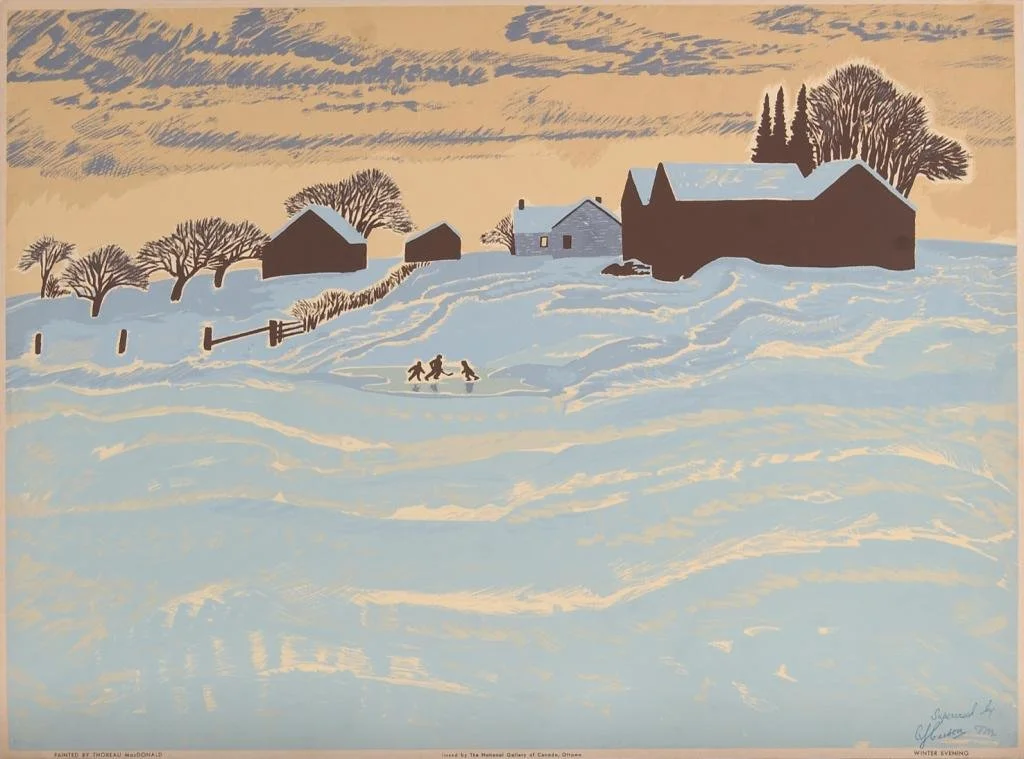
‘Winter Evening’
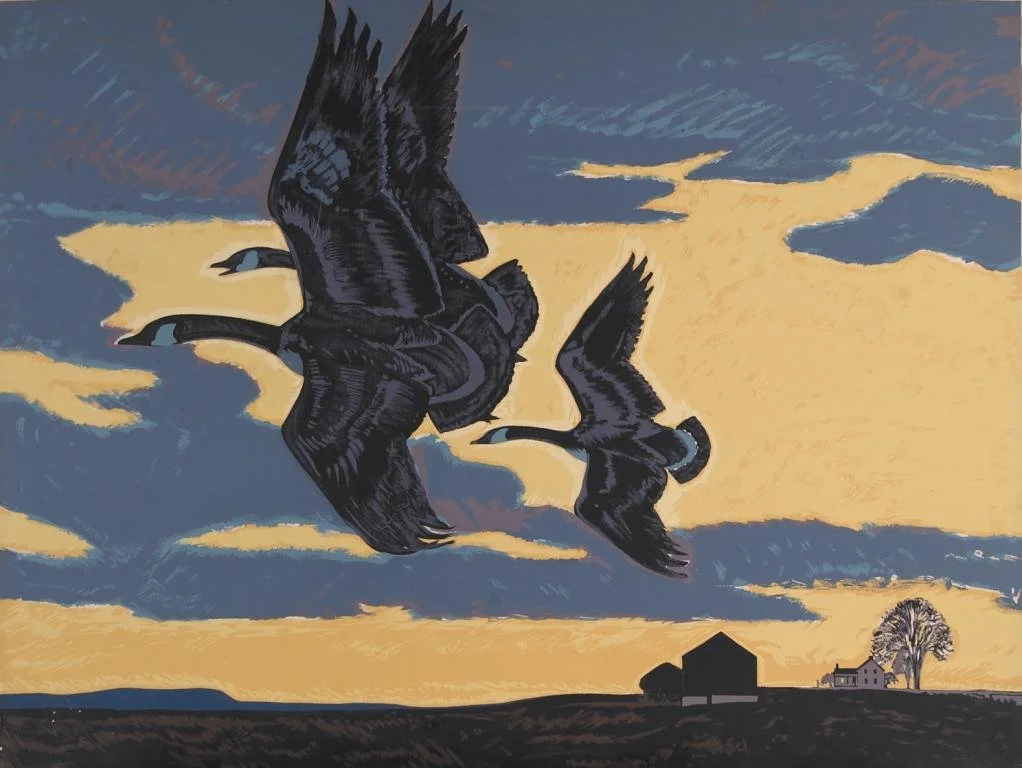
'Wild Geese'
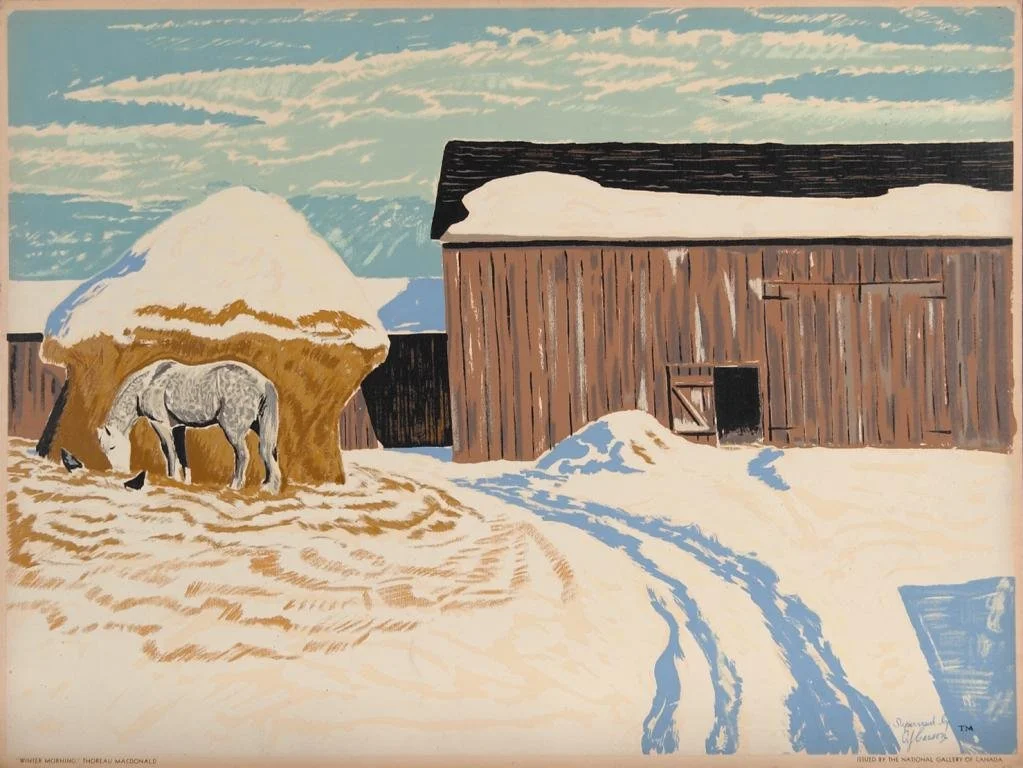
‘Winter Morning’
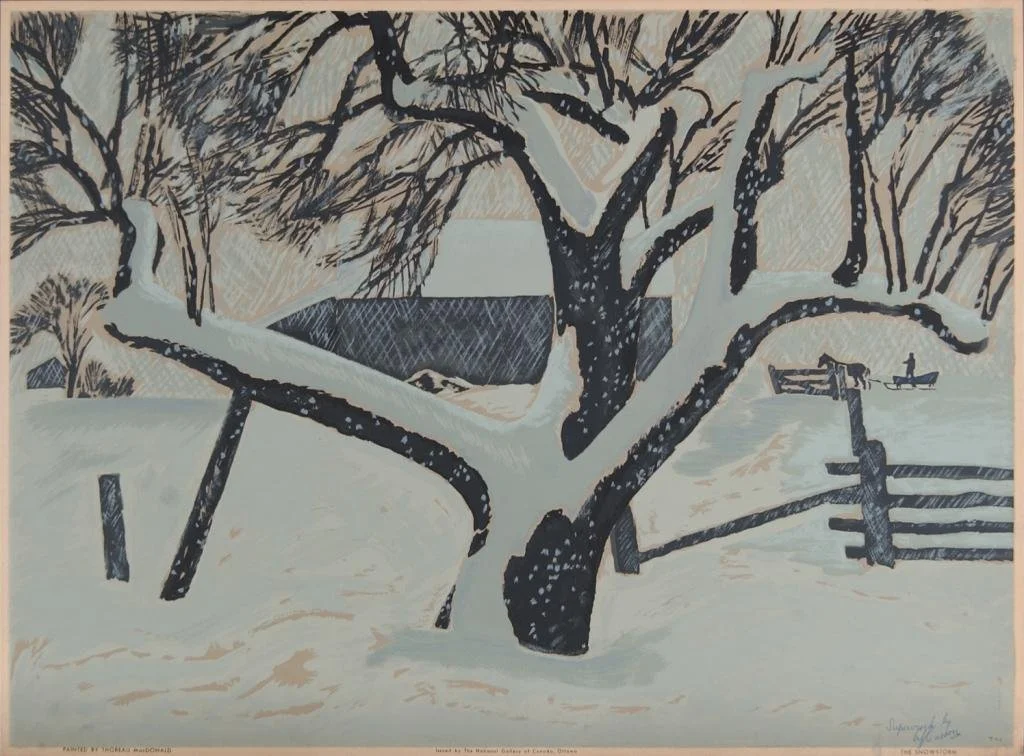
‘The Snow Storm’
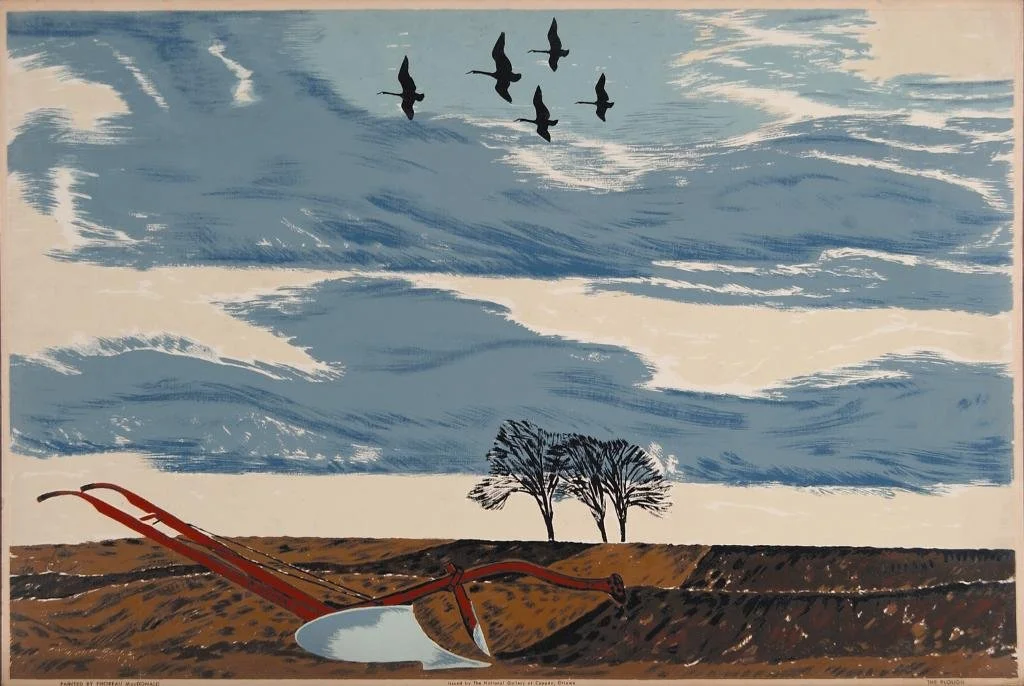
‘The Plough’
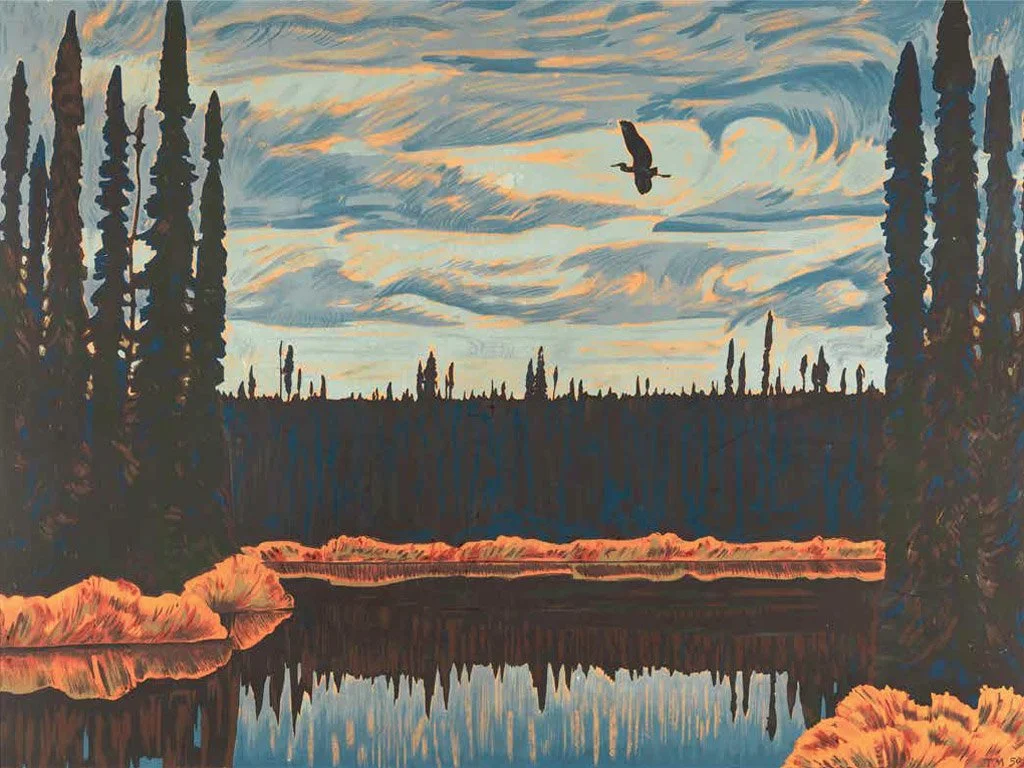
'Black Spruce' — 1950
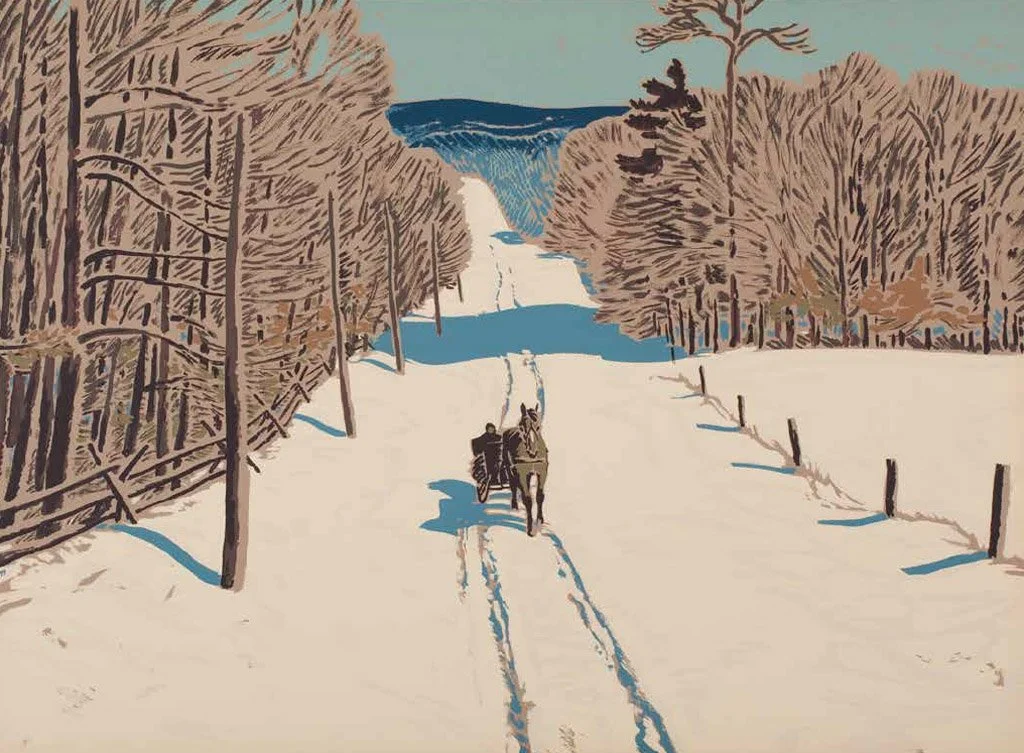
'Country Road' — 1945 - 1948
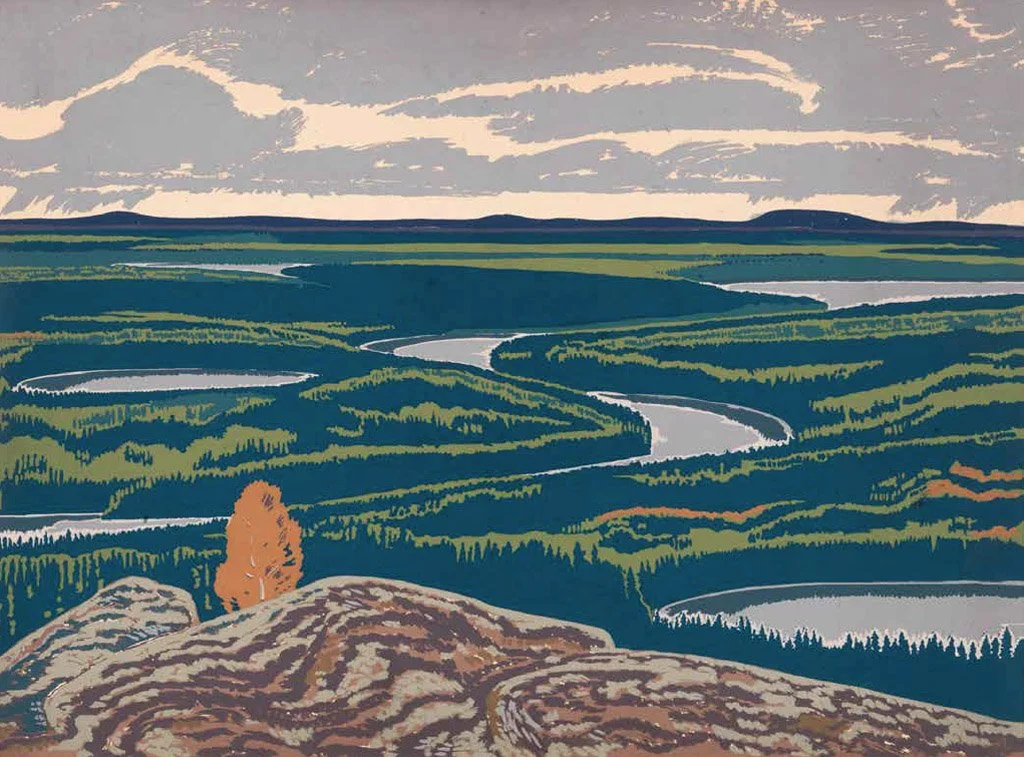
'The Forest' — 1947
Canadian artist Thoreau MacDonald was the only son of Group of Seven member J.E.H. MacDonald and was born near Toronto, where he was to spend most of his life. As might be expected, he was fully immersed in the painting life of his father and that of the other Group of Seven members. He accompanied his father on sketching trips and spent time with Tom Thomson at the Studio Building in Toronto.
A self-taught artist, Thoreau MacDonald began studying under his father in 1921, and by 1922 had successfully submitted his first linoleum cuts to the Canadian Forum, later becoming an illustrator and then the magazine’s art editor. In addition, Thoreau MacDonald contributed illustrations to some 150 journals, novels and books of poetry, and he was a founding member of the Canadian Group of Painters in 1933. George Burgoyne noted of his illustrative work that “MacDonald has shown a sympathetic understanding of his subject in illustrating the narrative, and skill in the small drawings that end chapters and also appear as incidental embellishments.”
The Canadian rural experience is about the seasons — their rhythms, sights and sounds. Along with the shortening of the days and the chilling of the air, the Canada goose helps to set the seasonal rhythm. To watch this great migration across the skies, with the familiar honking and shifting of position to save energy on the wing, is to know the approach of winter.
In ‘Wild Geese’, Thoreau holds the viewer aloft in the expansive sky with the birds, the farmstead visible on the distant horizon, the beak of one goose open as if honking to announce to those in the fields below that winter is coming.
‘The Plough’ recalls that at fifteen years years of age, Thoreau worked as a farm hand before taking up art studies, where the countryside around his home would have informed his art.
For many Canadians, the farm and its life, its seasonal rhythms and chores have been and remain commonplace. In the print ‘Winter Morning’, a lone horse enjoys a quiet meal of hay. Shadows on snow appear as blue or lavender, and a clear icy blue occupies the ruts of the path leading to the barn, evidence of human interaction despite the solitude and hush of the scene.
As a counterpoint to ‘Winter Morning’ with its clear bright light and promise of farm chores, is ‘Winter Evening’. When snow descends on the land, the pace slows and an audible hush envelops everything. The light becomes muted, shadows disappear, strong forms are silhouetted and the sky and ground merge as one. Thoreau reminds us of the joy of deep winter, with children at play on a homespun skating rink, taking advantage of every minute of light before dinner and darkness. As the light begins to fade and the buildings are rendered in dark shadow, there remains a luminous quality to the snow against which every object, human or man-made, is silhouetted.
Thoreau MacDonald’s graphic work and paintings can be found in many important public and private collections, including the McMichael Collection, the Art Gallery of Ontario, Hart House at the University of Toronto and the National Gallery of Canada.